
Digestion · 6 min
10 Things You Probably Don't Know About Dog Allergies & Paw Licking
Why dogs lick their paws, how allergies fit in, and what to try before your next vet visit.
 Miki Rapoport·
 Verified by Adam Polosetski, DVM
What helps with yeast on your dog's paws at home, which popular remedies to skip, and when it's time to see your vet.
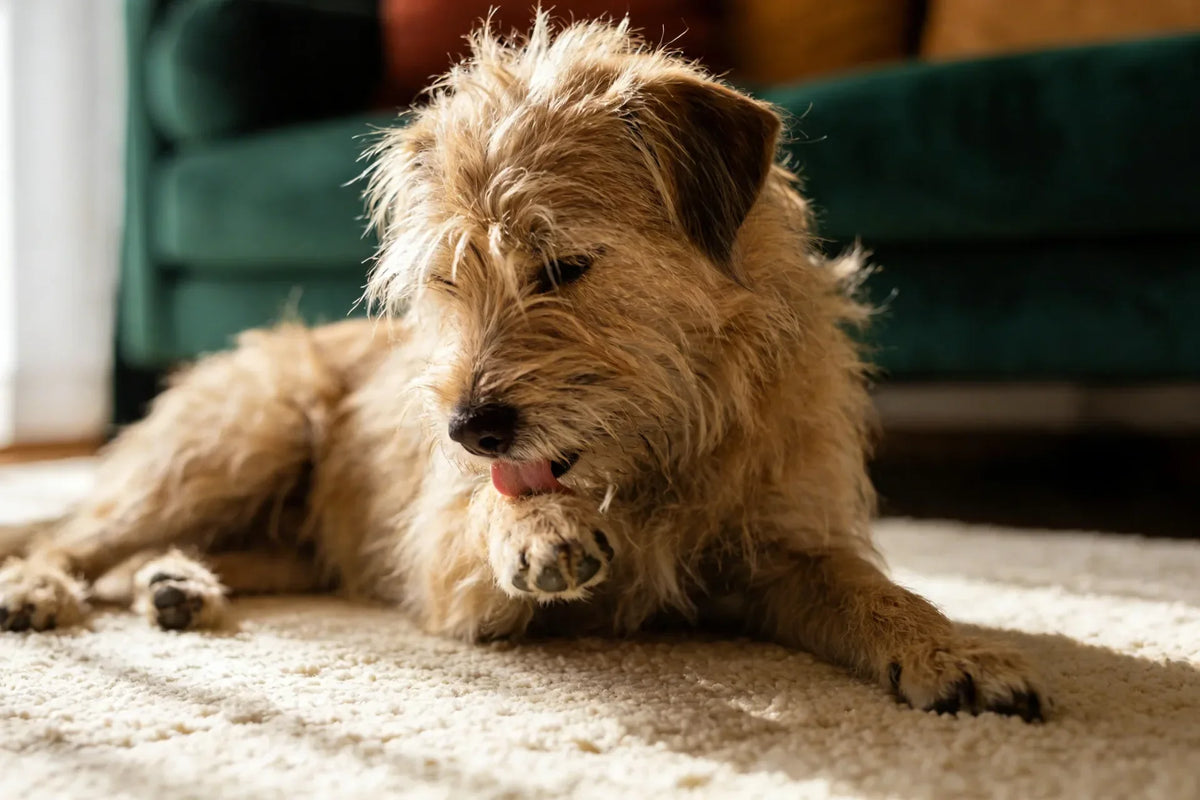
A little corn-chip smell on dog feet is normal. Most dogs have it and nobody really minds. The problem is when her paws start to smell sour and stale, like a sock at the bottom of a gym bag, and she's licking them every time she settles on the couch. That's usually when people start searching for a dog paw yeast infection home remedy, and the internet answers with vinegar, coconut oil and tea tree oil.
Some of what you can do at home is useful. Some of it isn't, and a couple of those popular fixes can actually make her feet worse or make her sick. Here's which is which, and when it's your vet's turn.

The yeast in question is almost always Malassezia pachydermatis. It lives on healthy dog skin in small numbers and normally causes no trouble at all. Trouble starts when it grows out of control. [1]
Between the toes is a great spot for that. It's warm in there, it gets wet on every walk through damp grass, and there isn't much airflow. Dogs who swim a lot, and dogs living through hot, sticky summers, tend to run into it more. [3]
There's usually something behind it too. Allergies are the most common one (pollen, food or fleas). Oily skin, hormone issues like hypothyroidism and steroid medications can set it off as well. [1] [2] Some breeds seem to get it more than others: Westies, basset hounds, cocker spaniels, poodles, shih tzus and dachshunds are all on the list. [1]
And if you're wondering, she didn't pick it up from another dog at the park. Yeast dermatitis isn't contagious. [1]

Most people notice the smell first. Yeasty paws smell musty and stale, much stronger than that usual snack-food scent. [3] After that, look for:
Smell and licking alone don't prove it's yeast, though. If you want the full list of reasons dogs go after their feet, our post on paw licking and dog allergies covers it.
From where you're sitting, a bacterial infection, an allergy flare and a grass awn stuck between two toes can look almost identical. Your vet tells them apart by pressing clear tape or a swab against the skin and looking at it under a microscope. [1] [2] It's quick and painless, and it often turns up bacteria as well, which get treated differently.
That's why guessing is risky. Treat yeast when it's really something else, and she stays itchy the whole time you're waiting for it to work.

The best home remedy is the boring one: keep her feet clean and dry.
None of this gets rid of an infection she already has. What it does is stop things from getting worse until she's seen, and it's a good habit to keep afterward. A daily chew won't clear an infection either. Pet Nugget has salmon oil, biotin and zinc to support normal skin and coat, and we'd leave it at that.
Apple cider vinegar soaks show up in every forum thread. A vet who answered this question for Petco said vinegar may reduce some of the yeast but won't reliably clear an infection, and she wouldn't depend on vinegar, peroxide or yogurt in place of real treatment. [4] Plus, vinegar on red, cracked skin is going to sting.
Coconut oil is the other one people swear by. A veterinarian writing for Great Pet Care puts it in the same category as vinegar and says it could even make things worse. [3] Greasy, yeasty skin really doesn't need more oil on it.
Tea tree oil is the one to be most careful with. Just a few drops of the concentrated oil on her skin, or licked off her paw, can seriously poison a dog. [5] Anything you put on her feet, expect it to end up in her mouth.

Once your vet confirms yeast, treatment usually starts on the skin. Shampoos with ketoconazole or miconazole are common, and the lather needs to stay on her for about ten minutes before rinsing. [1] Keep treats handy. And a towel for yourself.
Stubborn or widespread infections may call for antifungal pills, sometimes for several months, and antibiotics if bacteria have moved in too. [1]
The step people tend to skip is finding out why it happened. If allergies are driving it and they aren't managed, the yeast often returns, and some dogs flare up two or three times a year. [1] [2]
If you suspect yeast, book an appointment, since it needs a diagnosis anyway. Call sooner if:
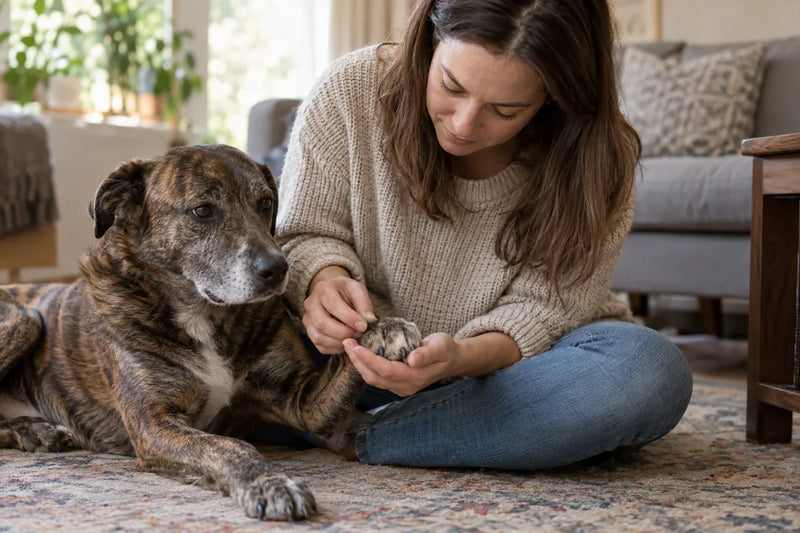
Take a photo on a bad day and make a note of everything you've already tried. Your vet will want to see both.
Images are illustrative and were created with AI. They don't show diagnosed cases.
 Miki Rapoport·
Verified by Adam Polosetski, DVM
Miki Rapoport·
Verified by Adam Polosetski, DVM
 Tony Cairo·
Verified by Adam Polosetski, DVM
Tony Cairo·
Verified by Adam Polosetski, DVM Miki Rapoport·
Verified by Adam Polosetski, DVM
Miki Rapoport·
Verified by Adam Polosetski, DVM