Published September 28, 2026Reviewed September 28, 2026
6 min
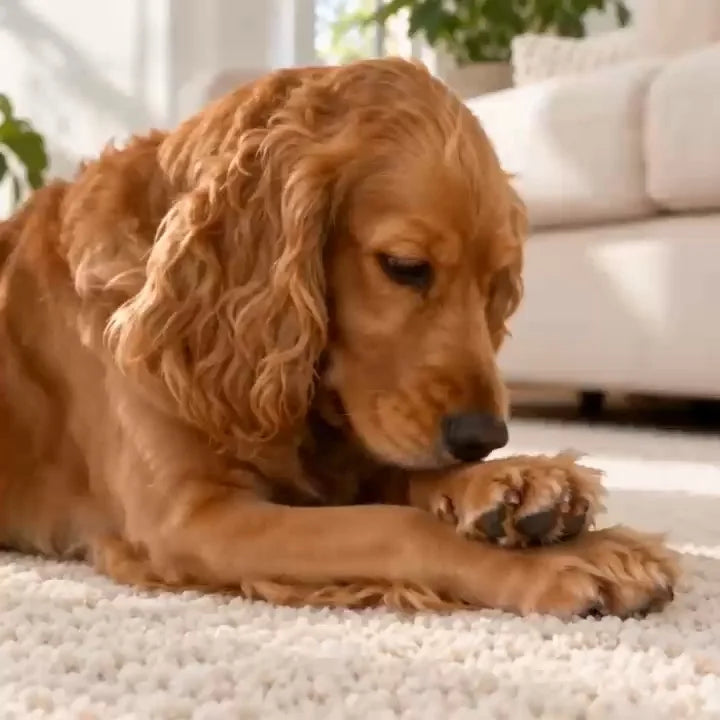
You know that wet, repetitive sound coming from the other end of the sofa? If your dog spends half the evening licking her paws, you've probably tried saying her name, moving her foot, or just turning the TV up.
An occasional wash is normal. When she keeps going back for more, though, something may be bothering her. Allergies are one possibility, and there's more to figuring them out than changing her dinner. A few things to know before you start shopping for itch relief.
1. Dog allergies don’t always come with a sneeze
We tend to think of allergies as sneezing, watery eyes and carrying tissues everywhere. With dogs, you're often looking for itchy skin instead. She might lick her paws, scratch her ears or rub her face along the sofa. No sneezing required. That doesn't mean every dog who licks a foot has allergies. A quick clean after a walk is ordinary dog housekeeping. Chewing until the skin gets sore, or returning to the same spot all evening, is a reason to take a closer look.
Watch the rest of her, too. If her ears have been bothering her, mention that when you call about the paws. [1]
2. Licking one paw? Allergies aren’t the only suspect
Before blaming pollen, have a look at the foot she's so interested in. A thorn between her toes or a torn nail could explain a sudden obsession with one paw.
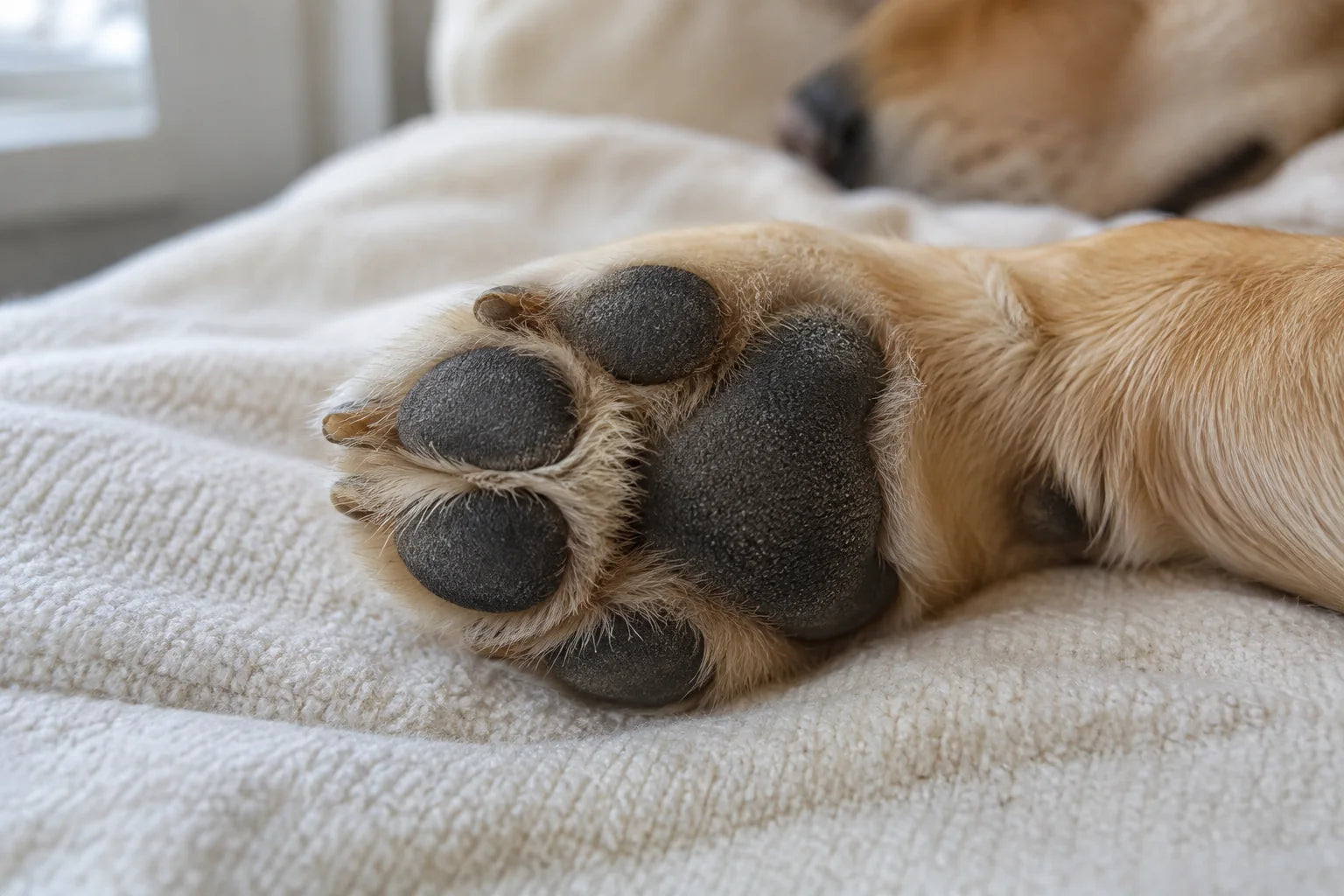
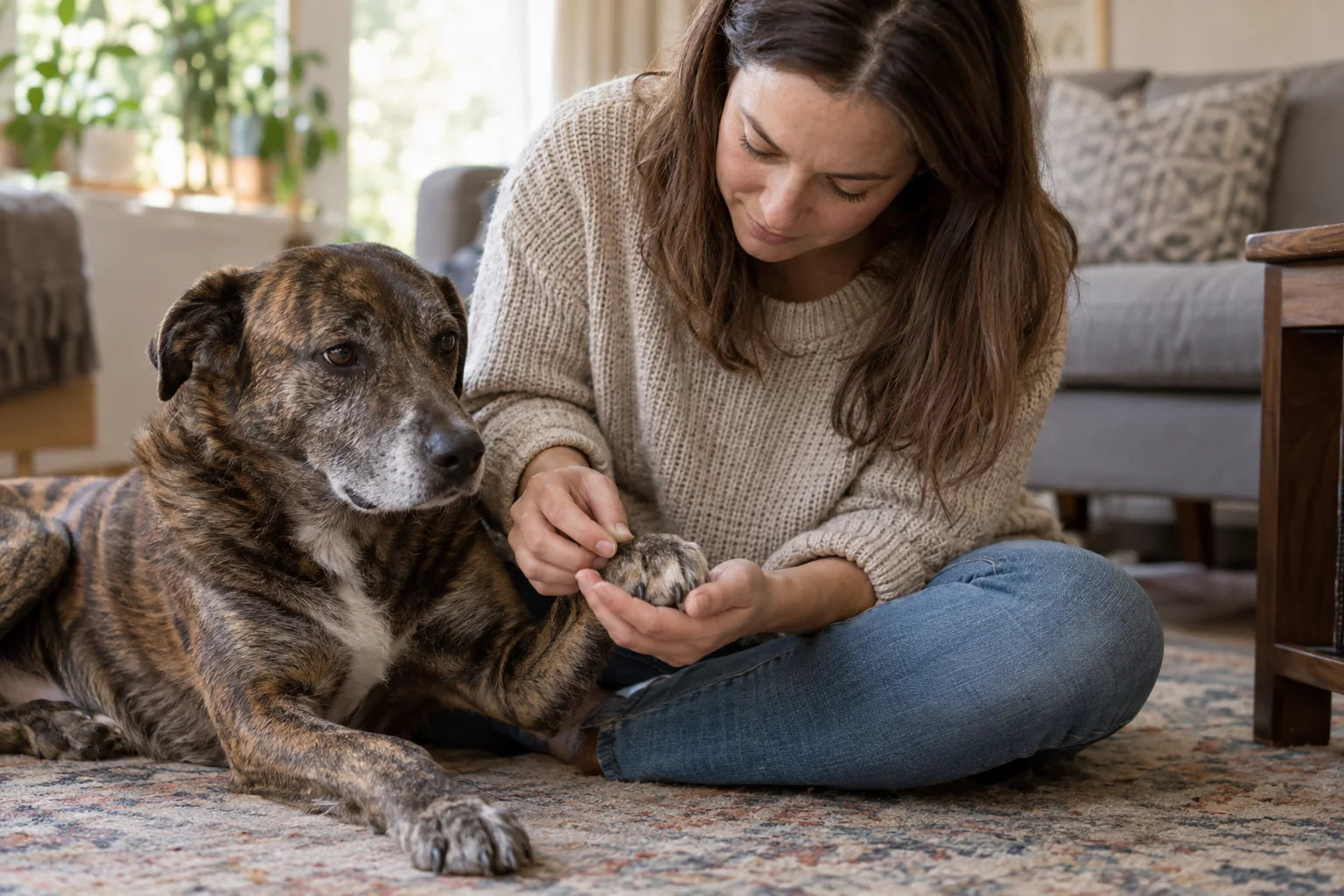
If she's comfortable letting you check, gently look at the pads, nails and between the toes. Leave anything embedded alone, and stop if handling the paw hurts her. This isn't the moment to test how patient your dog is.
Call your vet promptly if she's limping, swollen, bleeding or has an open sore. Tell them if the licking started suddenly and if she's bothering any other feet. [2]
3. Itchy paws can follow her indoors
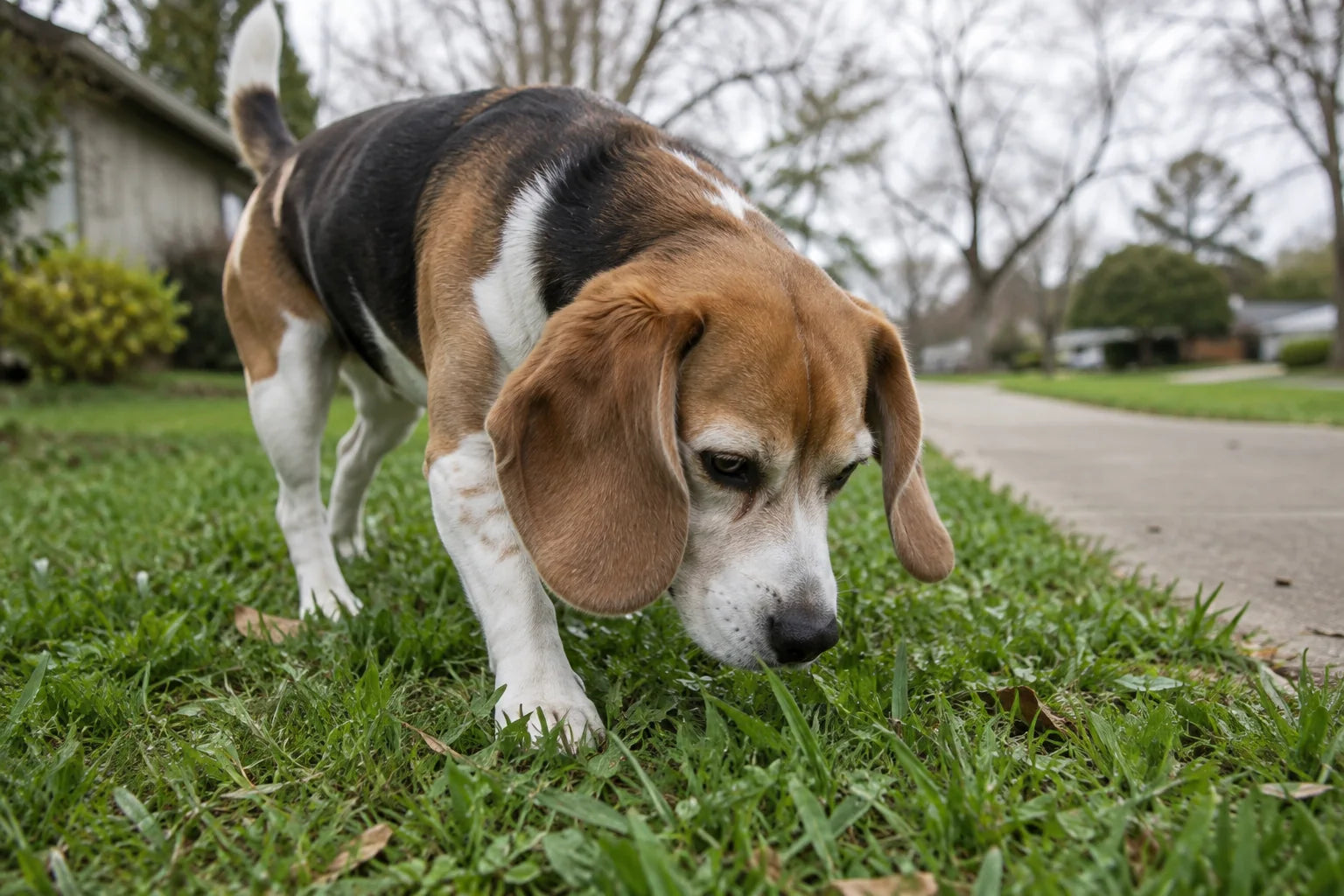
The lawn gets a lot of blame. Grass pollen can cause trouble for an allergic dog, but dust mites and mold can be a problem too. Staying home doesn't necessarily give her skin a break.
Some dogs get itchy around the same season each year. Others have environmental allergies that bother them through winter, when a grass allergy might be the last thing on your mind.
You may notice she's worse after a particular walk. Jot that down. Also mention a new floor cleaner if the timing fits; irritation from something touching her skin can look like an allergy. [3]
4. Food allergies can start with her usual dinner
“But she's always eaten that” sounds like a reasonable objection. Unfortunately, she can develop an allergy to food she's eaten happily for years.
Itchy paws won't tell you which ingredient to blame, or even if food is involved. Environmental allergies can look much the same. Trying a different bag every few days makes it harder to work out what's helping.
Your vet may suggest an elimination diet, then bringing back the old food to see if symptoms return. During that trial, check treats, flavored chews and supplements with your vet too. A little cheese from your sandwich counts. She may feel strongly that it shouldn't, but it does. [4]
5. Paws smell like corn chips? That doesn’t prove yeast
People aren't imagining the corn-chip smell. Bacteria normally living on a dog's skin can give her feet that faint snack-food scent. By itself, it doesn't tell you she has a yeast infection.
The useful question is what's changed. Have they always smelled a bit like that, or is the smell suddenly stronger and she's licking constantly? Redness or swelling adds another reason to get her checked. Your vet can take a skin sample to look for an overgrowth of bacteria or yeast. You can describe the smell without knowing what's causing it. Nobody expects you to diagnose a paw with your nose. [5]
6. Paw licking can turn a small itch into a bigger problem
She licks because it itches. Then all that licking and chewing damages the skin, and an infection can make her even itchier. By the time her paws are raw, there may be more going on than whatever started it.
This is why a vet might treat an infection as well as the allergy. Clearing up one doesn't necessarily deal with the other. The cause of the itch still needs attention, even after the damaged skin has healed.
If she's making the skin sore, call about protecting it while you arrange care. Your vet may recommend a properly fitted cone to keep her from doing more damage. [6]
7. Paw licking isn’t always a boredom problem
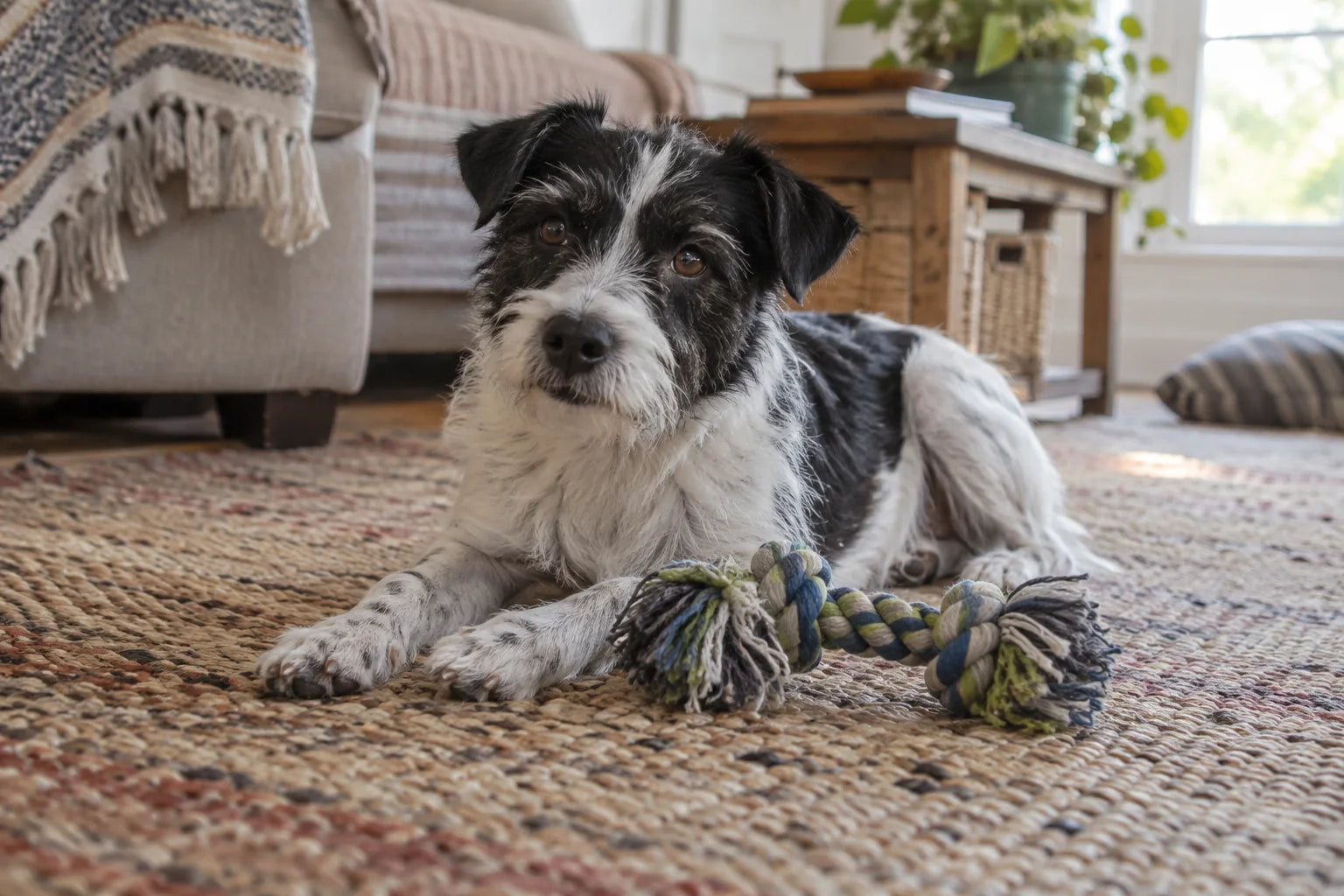
If she stops licking when you pick up the lead, it's tempting to put it down to boredom. Especially when she starts up again as soon as you're back at your desk. An interesting distraction can take her mind off an itch without making the itch go away.
Boredom and stress can contribute to licking, and some dogs develop a repetitive habit. Have pain and skin problems checked before settling on that explanation.
If behavior seems to be involved, tell your vet when it happens, such as when you're away or when she's settling down for bed. Help with anxiety or changes to her routine may be useful. Sniffing walks and suitable toys give her something else to do while you work through the cause. [7]
8. A quick rinse can help those itchy paws
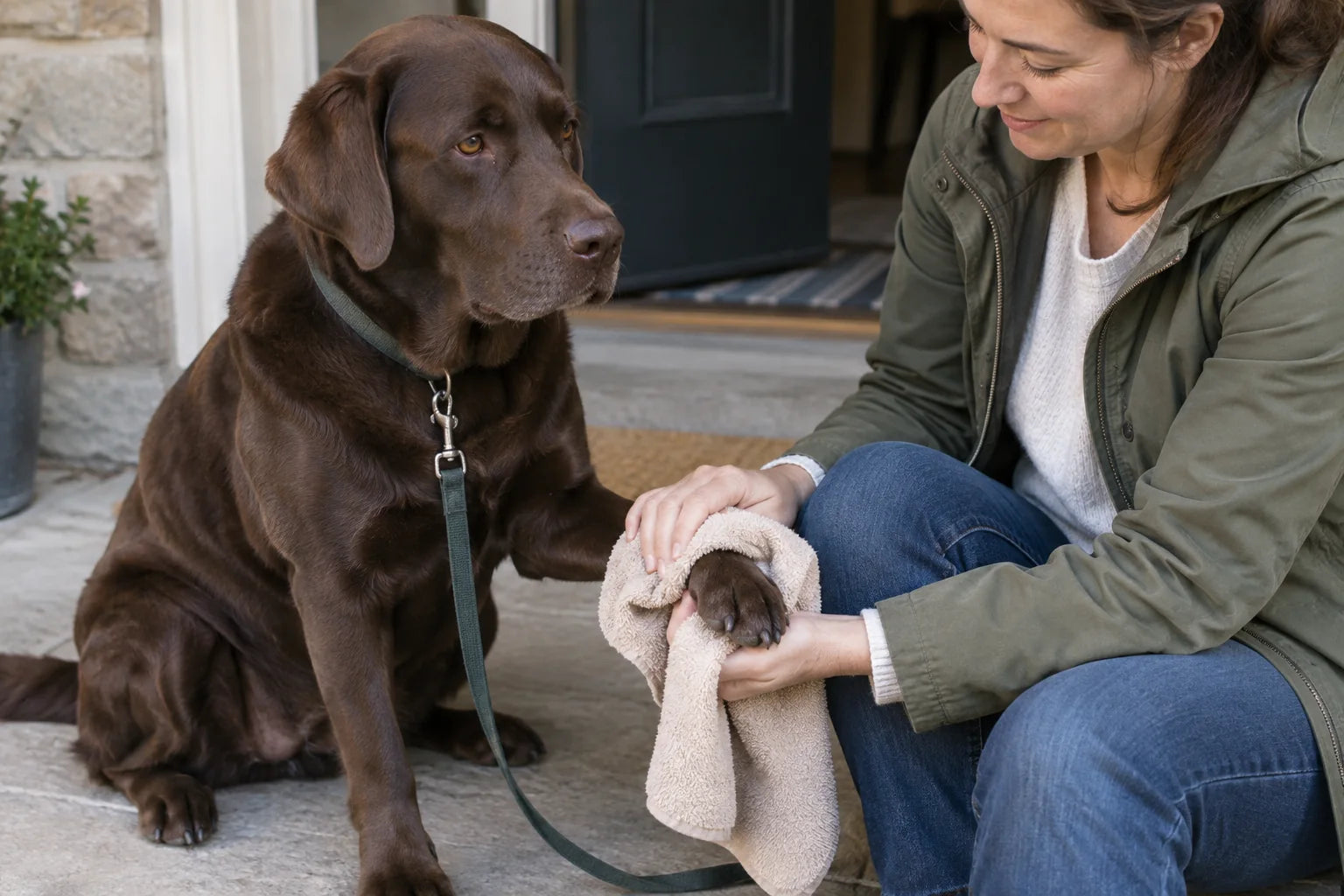
A clean towel by the door is a useful place to start. After a walk, gently rinse her paws with plain lukewarm water or wipe them with a damp cloth. That can remove some pollen and other irritants she's picked up. Dry between her toes afterward.
No scrubbing. Sore skin doesn't need extra friction, and this doesn't have to turn into a full bath every time she goes out for a pee.
If your vet has prescribed a paw wash, follow those directions. And if the licking carries on despite cleaning, say so at her appointment. A rinse can help with what's on her skin; it won't explain why she's itchy. [8]
9. Her itchy paws don’t need a salad dressing
Look up home remedies for paw licking and you'll soon find vinegar soaks, oils and people who sound very sure about both. It's understandable to want something you can try tonight, using what you've already got.
If her skin is raw or broken, skip the homemade mixtures. Don't use peroxide, essential oils or human creams without your vet's instructions. Some products interfere with healing, and whatever goes on her foot may end up in her mouth.
Before trying something new, send the ingredient list or a photo of the bottle to your vet. Include a photo of the paw if you can. [9]
10. Stopping paw licking starts with finding the cause
There isn't one best allergy medicine for every dog licking her paws. She may need treatment for parasites, medicine for an infection, help with the itch, or an investigation into a food or environmental allergy. Sometimes it's a combination.
Before the appointment, get a short video of what she's doing. Note when it started and which feet she bothers. Bring the names of anything you've tried, including the thing that seemed to help for two days and then didn't.
If treatment works but the licking comes back, book a follow-up. Many allergies need ongoing care. Those notes give your vet something useful to work with when it's time to adjust her treatment. [10]




 Tony Cairo·
 Verified by Dr. Adam "Polo" Polosetski, DVM