
Digestion · 6 min
Are Chicken Gizzards Good for Dogs? Yes, With One Big Catch
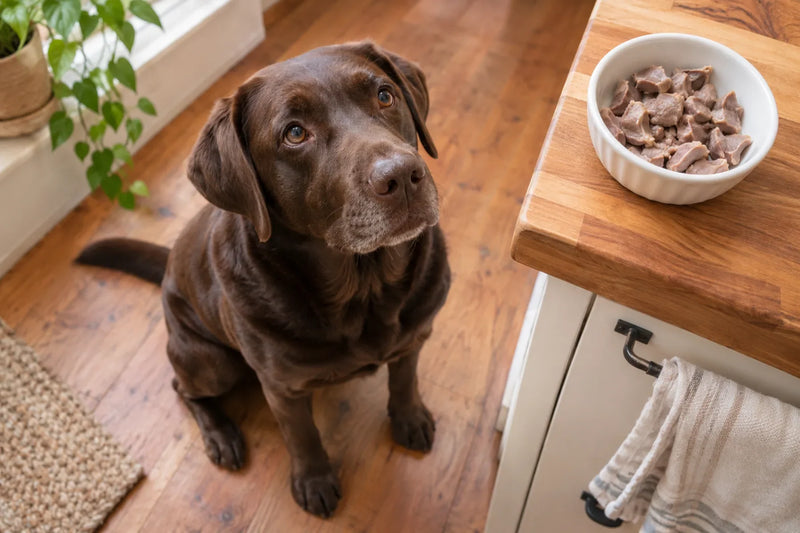
Cooked, plain chicken gizzards make a lean, high-protein treat for most dogs; raw ones bring Salmonella along.
 Miki Rapoport
A look at what canine turmeric studies measured, why kitchen mixes are different, and what to ask before starting a supplement.


The dog studies below don't establish a safe amount of kitchen turmeric to add to a meal. They tested particular extracts and mixtures and measured different things. Before you start a powder or a curcumin chew, show your vet what you're thinking of using.
If you're looking because your dog has started to move differently, tell the clinic what changed. Is she stopping halfway up the stairs? Taking longer to stand after a nap? Describe the change and when it began. It gives the vet a concrete starting point and keeps the conversation about your dog, instead of starting with a jar you've already bought.
If turmeric is already in something she takes, take a photo of the ingredient list. Look for the name, the form, the amount per serving and what else is in there. For a separate list of foods to check, see the Pet Nugget food safety guide.

Turmeric is the plant spice. Curcumin is one of the compounds in it. When a paper reports what happened after dogs took a curcumin extract, check how the extract was made and what else was given with it. You can't read that paper as a test of a spoonful from the spice jar.
Form matters even when the ingredient name stays the same. In a study in beagles, three specially formulated forms gave higher curcumin exposure in the bloodstream than the unmodified form. One was made with phospholipids, a type of fat. The researchers measured blood levels, so the result doesn't tell you whether a dog walked more comfortably or whether mixing turmeric with cooking oil would do the same thing.
On a label, ‘turmeric root powder’ and ‘curcumin extract’ tell you which material you're looking at. A number alongside one ingredient belongs to that ingredient. If a blend doesn't give a separate amount for curcumin, the amount for the whole blend won't tell you what share of it is curcumin.
The canine studies gave mixed results. A 2003 double-blind trial in 61 dogs with hip or elbow osteoarthritis tested an extract from two turmeric species. The investigators' overall ratings favored the extract. The owners' overall ratings and a measure of weight on the affected limb didn't show a statistically clear difference. That leaves those outcomes uncertain.
Another trial assigned 42 client-owned dogs with osteoarthritis to a control diet or a diet with curcuminoids, collagen and green tea extract for three months. Some assessments of pain differed, but forces recorded when the dogs stepped on the test platform and blood markers did not differ significantly. With all three ingredients in the same mix, the trial can't isolate curcumin's contribution. Some authors disclosed ties to the participating pet food company or said they were inventors on a related patent.
A 2026 study tested a different material, a turmeric extract rich in compounds called turmerosaccharides. It was another product-specific test. When a result sounds promising, check that the ingredient on the label is the one the researchers actually studied.

The dog research doesn't give us a kitchen recipe. A 1998 study on piperine, a compound in black pepper, measured curcumin levels after giving isolated piperine to rats and healthy human volunteers. Dogs weren't in that experiment. The beagle study tested manufactured formulations, including one that used phospholipids. It didn't test turmeric stirred into oil at home.
The evidence reviewed here doesn't address golden paste or ginger, so it gives no basis for a recipe. If you're looking at a blend, read the whole ingredient list. Ask the clinic about the exact mix if you’re considering it for a dog who already takes medication.
| What researchers tested | What to look for in the results | What it can’t answer |
|---|---|---|
| Manufactured curcumin formulations in beagles | How much curcumin reached the blood | Whether a dog moved better |
| Extract from two turmeric species | Investigator ratings, owner ratings and peak force on the limb | Whether kitchen turmeric would have the same effect |
| A diet with three active ingredients | Pain ratings and forces recorded as dogs stepped | Which ingredient made a difference |
Check before starting a concentrated turmeric product, especially if your dog takes medication. The Merck Veterinary Manual lists gas, bloating and diarrhea at high amounts, and notes a possible increase in bleeding risk if turmeric is combined with NSAIDs, a group of anti-inflammatory medicines often used for pain. Your vet can check the exact product against what your dog takes.
Include treats, chews and powders when you write the list. Mention any ongoing health conditions. If your dog already takes a turmeric product and develops symptoms, tell the clinic when they started and what she took. Ask the clinic before changing any prescribed medicine.
Bring the containers or a label photo. Two products can have similar names even when the lists on the back look quite different. Capture both panels if the ingredient list and the serving information are printed on opposite sides.

Start with the serving in the facts panel. The Pet Nugget beef daily soft chews label lists Boswellia extract (10:1), 25 mg per 2 chews (4 g). That’s the amount of Boswellia extract on the v19 label. Boswellia is a different ingredient from turmeric, which isn't on this formula's label. The number is there to tell you what the chew contains.
Take that same approach to a product that does contain turmeric. See whether the amount is for the root powder, the extract, or the entire blend. Check how much counts as a serving before you compare two numbers. A bigger number on a bottle doesn't establish that it has more of the form used in the study.
Photograph the ingredient list and list your dog’s medications. Then ask your vet about the exact product and whether it has a place in her routine.
 Miki Rapoport
 Tony Cairo·
 Verified by Adam Polosetski, DVM
 Miki Rapoport·
Verified by Adam Polosetski, DVM