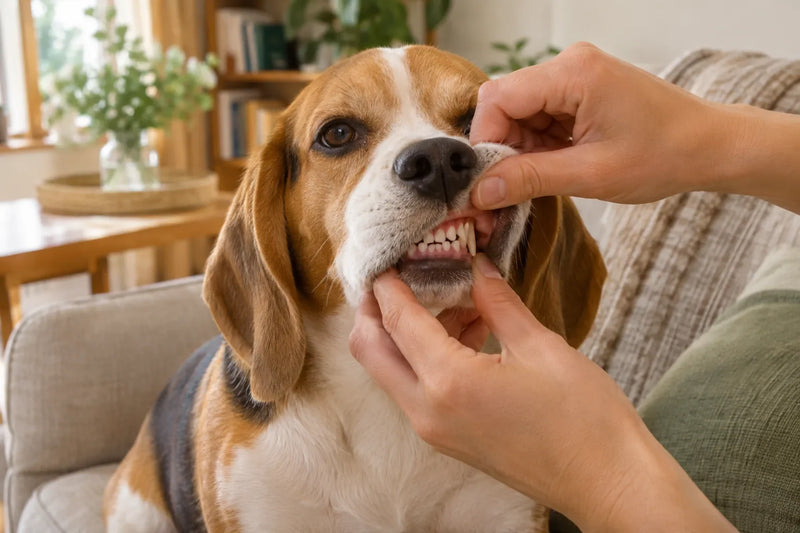
Is 7 Old for a Dog? What Changes in Her Daily Routine
Seven can be senior for a dog, but AAHA's lifespan-based definition and a few everyday observations make a better starting point for planning her next visit.
Seven can be senior, but the birthday alone doesn't decide
The birthday photo can wait. Your dog has spotted the leash. At seven, she might already be in her senior years, or that part of her life might still be a ways off. The distinction is useful if it helps you decide when to call the vet. She's going to make her own decision about whether to go for a walk.
The American Animal Hospital Association, or AAHA, uses the final quarter of a dog's estimated lifespan to define the senior life stage. Its senior patient guidance says there's no single age that fits every dog. That makes seven a reasonable time to discuss her life stage, rather than a deadline for deciding she's old.
Watch her come in from the walk and make her way to whatever spot she usually claims afterward. If it's the same trip she always makes, that is information too. What you want by the end of the week is a description of her day that you could give the vet without reaching for the word old.
What the final quarter means in actual numbers
A dog’s senior years depend on her estimated lifespan.
Say we're making up a nine-year lifespan for a dog. Its last quarter starts at six years and nine months. Make up a 13-year lifespan instead, and the last quarter starts at nine years and nine months. Your seven-year-old would be past the first line and well short of the second. That's how the same birthday can mean two different things.
Neither example forecasts how long your dog will live. The numbers explain AAHA's definition; they aren't two lifespan options you should choose between. Without an individualized estimate, you can't use that arithmetic to assign her a precise senior starting date. Even an estimate remains an estimate, so leave the interpretation to a conversation with your veterinarian.
Here's the question I'd put in a note for the next visit: do you consider her a senior now? If the vet says yes, ask whether they would change how often they see her. That second question is the reason to ask the first. Either way, you leave with something you can put on the calendar.
A human-years number won't settle the care question
Look at the floor surfaces your dog crosses every day.
If you're wondering how old a seven-year-old dog is in human years, this evidence doesn't support one universal number. AAHA's definition works from a dog's estimated lifespan, not a fixed human-age conversion. A shortcut may be the answer you hoped to find, but it can't establish her senior status under that definition.
A human age makes a decent conversation starter. What I would give the vet is the age you actually know, followed by something they can ask about: she turned seven last week and she still walks the long loop with us, or she has started waiting at the step on the way back in.
When your time is short, choose the task that helps with this week's decision. Looking for an exact human equivalent won't tell you when to book. Checking the date of her last wellness visit and writing down your question gives you something the veterinary team can use.
Watch the walk and the floor beneath her
Pick the walk you could do half awake. It might be the same two blocks and back or the little circuit around the building. Since you already know how she takes it, you'll have a better chance of noticing that she stops at one particular curb or goes down the front step differently than last week.
At home, look at the surfaces between her bed, bowl and door. AAHA's lifestyle and safety guidance says older dogs can need more traction on floors and stairs, along with changes that reduce stair use. The household decision depends on the route she actually takes. A slippery kitchen crossing and a necessary staircase present different practical questions.
For example, if she pauses where a rug ends and the smooth floor begins, note that exact spot. Consider whether a securely placed mat could provide traction there, and describe what you saw to the vet. If stairs are the obstacle, ask about adapting her route instead. The observation helps you name the question; it doesn't tell you the cause.
You can start with the place where the question comes up, rather than planning changes throughout the house. If she crosses the kitchen comfortably and you're wondering about the stairs, focus your note there. Ask which adjustment would suit that part of her day before buying something for a different problem.
Keep rest and appetite notes small enough to use
Write down what you notice in your dog’s usual routine.
Watch where she chooses to rest and how she uses the bedding already available. AAHA's guidance for families of senior pets includes padded bedding, secure rugs and mats, and attention to day-to-day changes. Individual needs vary. Look at her familiar resting spot before deciding whether a different bed or location would be useful.
At meals, record what you can see: whether she approaches her usual bowl and whether she leaves food she would ordinarily finish. Keep the note factual and tied to that meal. You don't have to turn the kitchen into a monitoring station. The aim is to bring a recognizable description of her week to the veterinary conversation.
For a manageable record, jot down the date, what happened and whether you've noticed it before. “Paused before the kitchen tile after the morning walk” is a hypothetical example of useful wording. “Getting old” leaves out the action. If you're unsure what an observation means, ask the veterinary team rather than deciding it must be normal aging.
The multiple-dog version of the appetite note can get a little ridiculous. A clean bowl tells you somebody ate. If you didn't see which dog finished it, give the note her name and say you don't know how much she had. That's more useful than assigning her the leftovers by process of elimination.
Ask which visit schedule fits her now
AAHA's dog life-stage guide advises at least annual visits for adult dogs and generally twice-yearly wellness visits for senior dogs. Those are starting points for a discussion with the veterinary team. Ask, “Given her life stage and this week's observations, should we plan twice-yearly wellness visits, or does she need a different schedule?”
If nothing seems different, say that too. The seventh birthday can still prompt a practical scheduling question. You aren't being asked to find a change that isn't there, and a quiet week doesn't answer the life-stage question by itself. Let the veterinary team put the observations and her age together.
Before you put your phone away tonight, find the date of her last visit if you have it. Below that, write what you noticed about the walk, the floor, her favorite bed and dinner. Call the veterinary team and ask when they'd like to see her. You can give them the useful part of the story in one breath.





 Tony Cairo