
Digestion · 6 min
Are Chicken Gizzards Good for Dogs? Yes, With One Big Catch
Cooked, plain chicken gizzards make a lean, high-protein treat for most dogs; raw ones bring Salmonella along.
 Miki Rapoport
A plain broth is an optional topper, so ask your vet whether it suits your dog, then check the ingredients, bones, calories and storage.

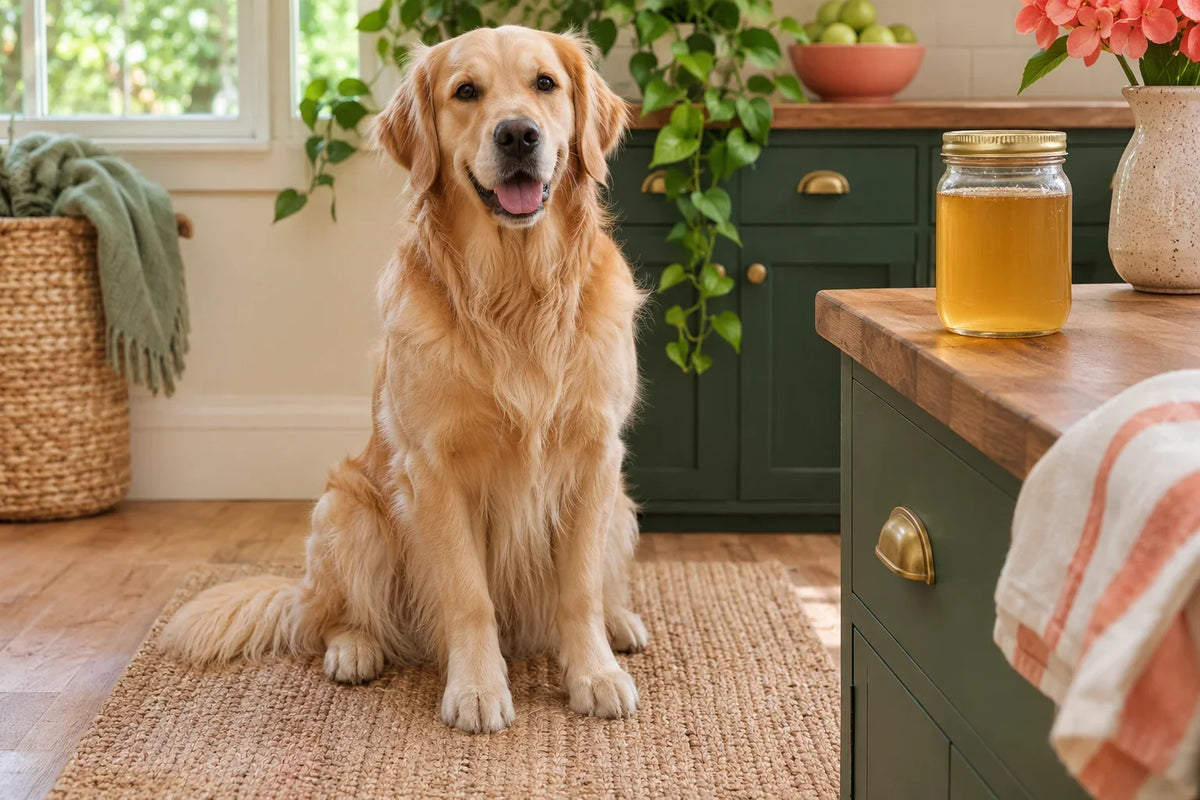
Bone broth for dogs is an optional topper, a little liquid poured over the food your dog already eats. It is not a meal. Her complete and balanced diet stays the base, and the broth goes on top of it, never in its place.
Start with the carton in your hand. The front sells a mood. Look on the back for ingredients and calories per serving. A promise about joints, gut or immune support is not something an ingredient list alone establishes, so if a carton makes one, ask the maker what backs it up.
Treats and other additional foods should stay within 10% of her daily calories, with 90% or more coming from a complete and balanced food. That 10% is one shared ceiling for everything extra added together, so broth has to fit alongside snacks and chews. Whether broth suits her at all is a question for her veterinarian.
Plain water stays in her bowl either way.

Three things should keep a broth out of her bowl: onion, garlic or chives on the ingredient list, a salt level you cannot account for, and any bone. Check them in that order.
Ingredient list first. Onion, garlic and chives are the names to look for. They can irritate the digestive tract and damage red blood cells, which can lead to anemia, and dogs are at risk depending on how much they take in. A broth made for the family kitchen may list them.
Salt comes second, and the amount is what counts. Too much can mean extra thirst and urination and, depending on how much she takes in, vomiting, diarrhea, tremors and seizures. The concern is excessive salt, not every trace and not all added salt. If the label does not make the sodium clear, ask the maker or her veterinarian.
The ASPCA warns that feeding raw bones may cause injury or a digestive-tract blockage serious enough to need surgery. That warning does not test cooked or strained broth. Our precaution for a broth serving is to keep out every bone and fragment. A strainer does not guarantee that, so leave out a batch you cannot check.
If you suspect she has eaten something hazardous, contact your veterinarian promptly. That covers a broth with onion, garlic or chives, a very salty one, or a swallowed bone. The amount matters, so note how much you think she took and keep the package.
If another food on the counter makes you unsure, the What Can Dogs Eat tool is a quick lookup.
There is no standard serving. Start with the general 10% ceiling for all extras. Look for calories per prepared serving on the label. If they are absent, ask the maker or her veterinarian, and leave the product out of the calorie plan until you can account for it.
A serving is whatever unit the label names: a cup, a scoop or a pouch. The published example shows the arithmetic: a dog who eats 100 Calories a day gets at most 10 Calories from extras. If your dog is a small one, her daily calories are lower, so her 10% is smaller too. It is a worked example, not a feeding amount for any dog.
The ceiling is general, not permission for her in particular. If she has a medical condition or eats a vet-directed diet, ask her veterinarian before the first spoonful.

Ready-to-use, powder and homemade broth can each work if they pass the same checks. Only the first question changes.
| Form | Questions to ask | What to look for |
|---|---|---|
| Ready-to-use | Does the ingredient list pass the earlier ingredient checks? How many calories are in one serving? | A full ingredient list, calories per labeled serving and opened-storage directions. |
| Powder or concentrate | How much water makes one serving? Are the calories for the dry scoop or the mixed serving? | Mixing directions followed as written and the unit named, such as a scoop or a pouch. |
| Homemade | Does the pot pass the earlier ingredient checks, and is every bone fragment out? Which recipe suits her? | A recipe her veterinarian is comfortable with, plain ingredients and a serving that fits her 10% budget. |
Ready-to-use is the easiest to check. The carton should carry an ingredient list, a calorie figure and opened-storage directions. Note the lot number too, the code that ties a package to one production run, in case you need to ask the maker. Serving size tends to live in the fine print, a modest home for the number that matters most.
Powder adds one question: how much water makes one serving. Mix it as the directions say, and match the calorie figure to the state the label describes, dry scoop or mixed serving. A scoop and a tablespoon are different units unless the maker gives a conversion.
Homemade carries the most responsibility. The ingredient checks and the bone rule apply to your pot as much as to a carton, and which recipe suits her is a question for her veterinarian. For a longer walk through serving units, see this guide to reading a dog food topper label.
These reviewed sources do not rank beef, chicken or turkey bases, so which fits depends on her diet and known restrictions. The useful question is which one fits what you already know about her diet.
A known food restriction is the case that matters, such as an ingredient her veterinarian has asked you to avoid. Read the base animal on the label and compare it with her regular food. If you are unsure, ask her veterinarian before the first spoonful.
Past that, every base gets the same ingredient, bone, salt and calorie checks.

Refrigerate it within two hours of cooking, or within one hour if the temperature is above 90 F, then use it within three to four days or freeze it. These are general food-handling rules for perishable leftovers, not dog-specific advice.
Do not wait for a big pot to cool on its own. A large volume takes a long time to cool, so divide it into shallow containers right away. Hot food can go straight into the refrigerator, or you can chill it in an ice or cold water bath first. Cover or seal each container, and keep the refrigerator at 40 F or below.
Label each container with the date, so nobody has to guess later.
Packaged broth follows its own rules. Once a carton or pouch is opened, follow the opened-storage directions printed on it, not the general leftovers timing.
Before you pour, run this list on the carton, powder or pot:
 Miki Rapoport
 Miki Rapoport
 Miki Rapoport